


Stay
Where to Stay
Guesthouses, small hotels and resorts near La Passe.
Coming soonLa Digue is the small, slow-paced island many visitors remember most — almost car-free, home to Anse Source d'Argent, and best explored by bicycle between granite-boulder beaches.
La Digue is the small, slow-paced island that many visitors remember most. There are almost no cars: you get around by bicycle, on foot or by ox-cart-style taxi, and the rhythm of the island slows to match. It's home to Anse Source d'Argent — one of the most photographed beaches in the world — and to a relaxed, granite-and-palm landscape that feels a world away from everyday life. This guide helps you plan La Digue before you arrive.
Yes — for many travellers La Digue is the highlight of a Seychelles trip. It's small, calm and almost car-free, which makes it feel genuinely different from Mahé and even Praslin. You come here to cycle between beaches, swim and snorkel, watch the sunset over granite boulders, and slow down.
La Digue suits couples and honeymooners, families who enjoy a gentle pace, cyclists, photographers and anyone who wants the classic Seychelles postcard in real life. It works beautifully as a two-to-three-night stay, or as an easy day trip from Praslin — though staying overnight lets you enjoy the island once the day-trippers have left.
| Island | La Digue — small, relaxed and largely car-free |
|---|---|
| Best known for | Anse Source d'Argent, cycling, granite beaches and a slow pace |
| Gateway | By ferry, usually from Praslin (about 15 minutes) — no airport |
| Main village | La Passe (the port) |
| Good for | Couples, families, cyclists, photographers and slow travel |
| Getting around | Bicycle (the main way), on foot, and a limited number of taxis/buggies |
| Accommodation | Guesthouses, small hotels, self-catering and a few resorts |
| Currency | Seychelles rupee (SCR) |
A day trip (from Praslin) is enough to see Anse Source d'Argent and cycle a little, but it feels rushed and you'll share the beaches with other day visitors. Two nights is the sweet spot — time to explore several beaches, enjoy the island after the day-trippers leave, and settle into the pace. Three or more nights suit travellers who want to fully unwind, add quieter beaches like Anse Cocos, and take their time.
La Digue has no airport, so you arrive by ferry. The most common route is the short crossing from Praslin (Baie Sainte Anne) to La Digue's port at La Passe, which takes roughly 15 minutes. From Mahé, you travel first to Praslin — by ferry (Cat Cocos) or a short domestic flight — and then connect to La Digue.
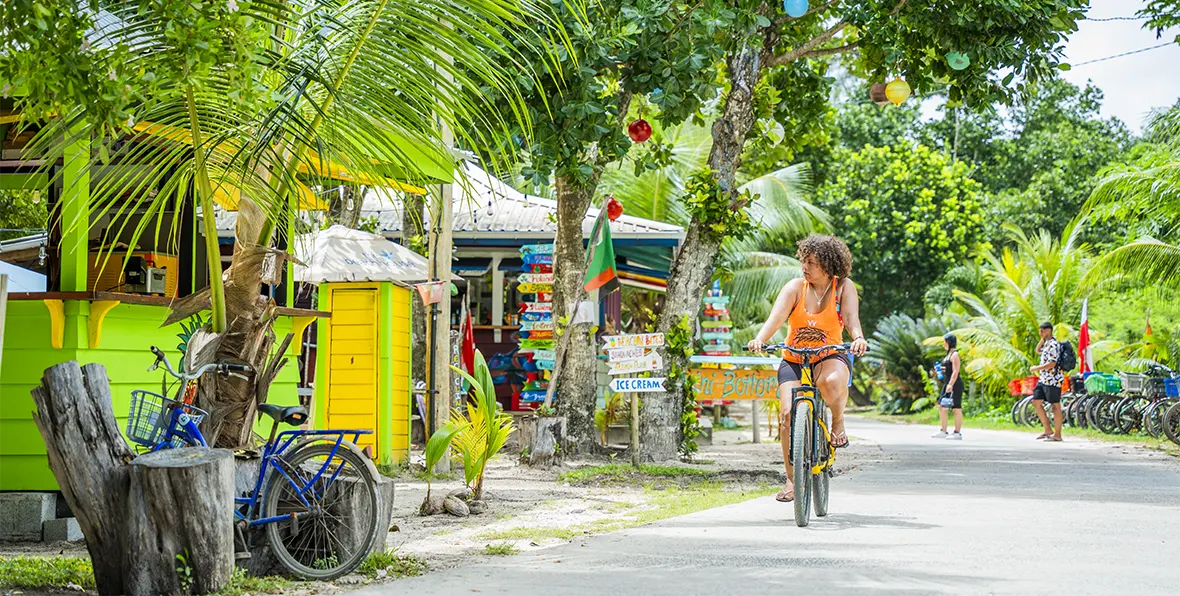
This is what makes La Digue special: there are almost no cars, and the bicycle is the main way to get around. Bikes are widely available to rent near the jetty in La Passe and through most accommodation, and the island's coastal roads are gentle and easy to ride.
Renting a bike for your stay is inexpensive and the most enjoyable way to explore. Check the brakes and tyres before setting off, bring a lock, and carry water and sun protection, as shade is limited on some stretches. For luggage transfers, guests who can't cycle, or reaching your accommodation on arrival, the island has a limited number of taxis and small electric buggies — agree the fare before you set off.
Most accommodation is in and around La Passe, the main village near the port, which keeps you close to the ferry, bike rental, shops and restaurants. Staying a little further out gives you more quiet, but you'll rely on your bike for everything.
La Digue is mostly guesthouses and small hotels, with some self-catering apartments and a handful of resorts and boutique properties. It's an intimate, personal kind of place to stay rather than a big-resort island. Book ahead in high season, as the island has limited rooms.
Compare guesthouses, small hotels and resorts near La Passe and the beaches, and check live availability for your dates.
Some links on this page are affiliate links. If you book through them, Hello Seychelles may earn a commission at no extra cost to you.
Explore Places to Stay on La DigueDetailed Where to Stay on La Digue and Best Hotels on La Digue guides are coming soon.
La Digue's beaches are the reason many people come to Seychelles. As always, conditions vary with wind, swell, tide and season, and some beaches are calm while others can have strong currents — so check before swimming and ask locally.
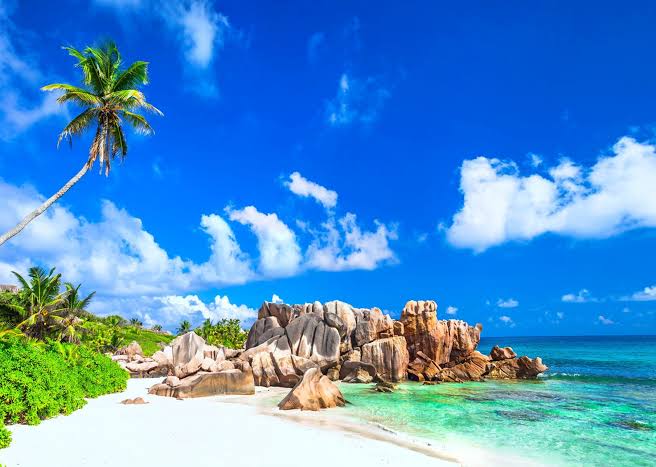
Anse Source d'Argent is the island's icon: shallow, sheltered water and sculpted granite boulders, reached through L'Union Estate (see below). It's usually calm and photogenic, and busiest in the middle of the day. Grand Anse, Petite Anse and Anse Cocos on the south-east coast are wilder and more dramatic, wonderful for scenery and walks, but they can have strong currents and are not always safe for swimming — take care. Anse Sévère and Anse Patates in the north are smaller and good for snorkelling when calm.
| Beach | Best for | Swimming note |
|---|---|---|
| Anse Source d'Argent | Scenery, photos, families | Usually shallow & calm; entry via L'Union Estate |
| Grand Anse | Dramatic scenery, walks | Currents can be strong — take care |
| Petite Anse / Anse Cocos | Quiet, wild beauty | Reached on foot; conditions vary |
| Anse Sévère | Snorkelling when calm | Check daily conditions |
| Anse Patates | Small cove, snorkelling | Check daily conditions |
Full Best Beaches on La Digue guide coming soon.
Anse Source d'Argent is reached through L'Union Estate, a historic coconut and vanilla plantation that also has giant tortoises, an old plantation house and an atmospheric granite landscape. It's a pleasant short visit in its own right, and the gateway to the island's most famous beach.
Beyond the beaches, the pleasure of La Digue is simply cycling and exploring. Ride the coastal roads between beaches, visit L'Union Estate and its tortoises, and look for the rare Seychelles paradise flycatcher in the Veuve Nature Reserve. More active visitors can hike to Nid d'Aigle, the island's high point, for wide views, or walk the trail over to Anse Cocos. Snorkelling is good on calm days, and boat excursions run to nearby islets and snorkelling spots.
Access rules and fees for reserves and estates can change, so check locally before visiting.
Compare boat trips, snorkelling excursions and guided experiences around La Digue, and reserve ahead in busy periods.
Explore La Digue Tours & ExcursionsFull Things to Do on La Digue guide coming soon.
La Digue's restaurants and Creole takeaways are concentrated around La Passe, from casual local spots to hotel and guesthouse dining. Menus depend on fresh fish and ingredients, kitchens can close earlier than European visitors expect, and choice is smaller than on Mahé or Praslin — so it's worth reserving in high season and checking Sunday and holiday hours. Many guesthouses also offer half-board, which can be convenient given the island's size.
Shopping & essentials: La Passe has small shops and a few grocery stores for water, snacks, sunscreen and basics, but choice is limited — bring anything specific you need, and don't count on late-night shopping. Money: the currency is the Seychelles rupee (SCR); cards are accepted in many hotels and restaurants, but carry some cash for small purchases and bike rental. Mobile data is useful for maps and messaging, though signal can vary. Water: treated public water is supplied; some visitors prefer filtered or bottled water — ask your accommodation about local conditions. Weather: tropical, with quick passing showers and a trade-wind influence; a rainy forecast rarely means cancelling plans. See our best time to visit guide and the Seychelles Meteorological Authority.
La Digue has a small clinic for basic and urgent needs, with more extensive services on Praslin and Mahé. For details see our healthcare and pharmacies guide.
With children: the calm, shallow water at Anse Source d'Argent and the car-free roads make La Digue relatively easy with kids — just supervise closely at the wilder south-east beaches and check daily conditions. Couples & honeymooners: La Digue is one of the most romantic places in Seychelles, with quiet beaches, sunsets among the granite boulders and an unhurried pace. As a day trip: it's an easy 15-minute ferry from Praslin, but staying overnight is far more rewarding if your itinerary allows. See our Mahé vs Praslin comparison and 7-day itinerary to fit La Digue into your trip.
The usual ones on La Digue: trying to "do" it as a rushed half-day trip; assuming every beach is calm (the south-east beaches can have strong currents); not booking ferries or rooms ahead in high season; expecting big-island shopping and dining choice; and packing the day so full that you miss the quiet, car-free calm that makes the island special.
Adapt these to the weather and your energy — they aren't the only good routes.
Day trip (from Praslin): ferry over, rent a bike, visit L'Union Estate and Anse Source d'Argent, cycle to one more beach, lunch in La Passe, return in the afternoon.
Two nights: Day 1 — settle in, L'Union Estate and Anse Source d'Argent, sunset near the boulders. Day 2 — cycle to Grand Anse and Petite Anse (take care swimming), snorkel at a calm northern cove, relax.
Three or more nights: add the walk to Anse Cocos, a hike to Nid d'Aigle, a boat or snorkelling excursion, and plenty of unhurried beach time.
Use these to go deeper. More detailed La Digue guides are being published gradually.
Guesthouses, small hotels and resorts near La Passe.
Coming soonAnse Source d'Argent and beyond.
Coming soonCycling, L'Union Estate and reserves.
Coming soonSee what's available on La Digue and check current options for your dates.
View Current Stays on La Digue