Best Time to Visit Seychelles: A Month-by-Month Guide
Seychelles is warm all year — the season shapes the sea and the wind, not whether the sun shines. Here’s how each month feels, so you can match your trip to calm seas, hiking weather or a winter escape.
The best time to visit Seychelles depends less on chasing a single "perfect" week and more on matching the season to what you actually want to do — calm seas for snorkelling and diving, breezier air for hiking, or simply an escape from the European winter. Seychelles is tropical and warm all year; this month-by-month guide explains how conditions shift so you can choose the right broad period, then fine-tune with the local forecast.
In this guide
Seychelles' two seasons
Seychelles has a warm, tropical climate shaped by two main wind periods rather than a hot-and-cold cycle:
The northwest-wind period (roughly November to March) tends to be warmer and more humid, with a higher chance of rain and generally calmer, lighter winds. January is normally around the peak of the wetter season. The southeast trade-wind period (roughly May to September) is generally drier and less humid, breezier and a touch cooler, which many find excellent for hiking and active days — though exposed beaches can be rougher. Between them, the transition months of April and October often bring the calmest seas and the strongest all-round conditions.
Month-by-month at a glance
A quick overview — qualitative, since exact conditions vary year to year. April and October stand out as the strongest all-round months.
| Month | Season | Feel | Especially good for |
|---|---|---|---|
| January | NW winds (peak rain) | Warm, humid, wettest | Escaping winter, quieter travel |
| February | NW winds | Warm, humid, showers | Winter escape |
| March | NW winds (easing late) | Warm, humid | Winter escape, transition |
| April | Transition | Light winds, warm, calm sea | Swimming, snorkelling, diving, honeymoons ★ |
| May | Early SE trades | Drier, less humid | Beaches, hiking, snorkelling |
| June | SE trades | Breezy, drier, cooler | Hiking, exploring Mahé |
| July | SE trades (breezy) | Cooler, low humidity, windy | Hiking, families, exploring |
| August | SE trades | Breezy, low humidity | Land-based exploration |
| September | SE trades (easing late) | Breeze easing | Beaches, hiking, island hopping |
| October | Transition | Calmer sea, warm | Diving, snorkelling, honeymoons ★ |
| November | Early NW winds | Warm, often calm, humidity rising | Island hopping, calm sea |
| December | NW winds | Warm, humid, showers | Winter escape |
Month-by-month guide
January to March
These months fall within the northwest-wind period. Expect warm, humid conditions with a higher likelihood of tropical showers — January is normally around the peak of the wetter season, with February and March gradually easing toward the later transition. This does not mean continuous rain: sunny periods still occur, seas are often calmer, and for travellers escaping the European winter the contrast in temperature is dramatic. Choose these months if winter escape and warm, calm water matter more to you than guaranteed dry days.
Seychelles in April
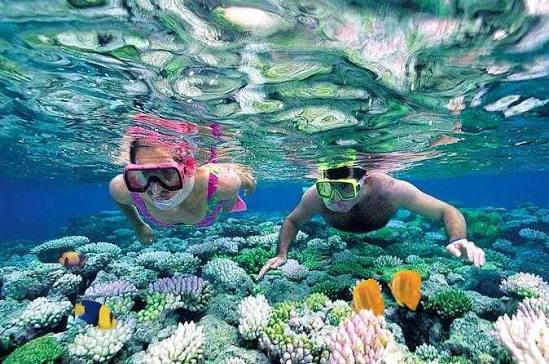
April is one of the strongest all-round months for Seychelles. The northwest winds weaken before the southeast trade winds become fully established, and the result can be light winds, warm temperatures, warm sea, calmer marine conditions and good visibility for water activities. It's particularly attractive for swimming, snorkelling, diving, honeymoons, island hopping and first-time visitors.
Seychelles in May
May is another excellent month, particularly during the earlier part as conditions transition toward the southeast trade-wind period. Rainfall tends to decline as the southeast winds become established, and the weather often feels slightly less humid than during the first months of the year. May can be particularly suitable for travellers who want beaches, hiking, snorkelling, mixed island itineraries and comfortable outdoor exploration. By later May, wind can become more noticeable.
Seychelles in June
June normally sits firmly within the southeast trade-wind period: expect more breeze, lower humidity, somewhat cooler conditions and generally drier weather. This can be an excellent month for exploring Mahé, hiking and active holidays — however, some exposed beaches can experience stronger waves or rougher conditions.
Seychelles in July
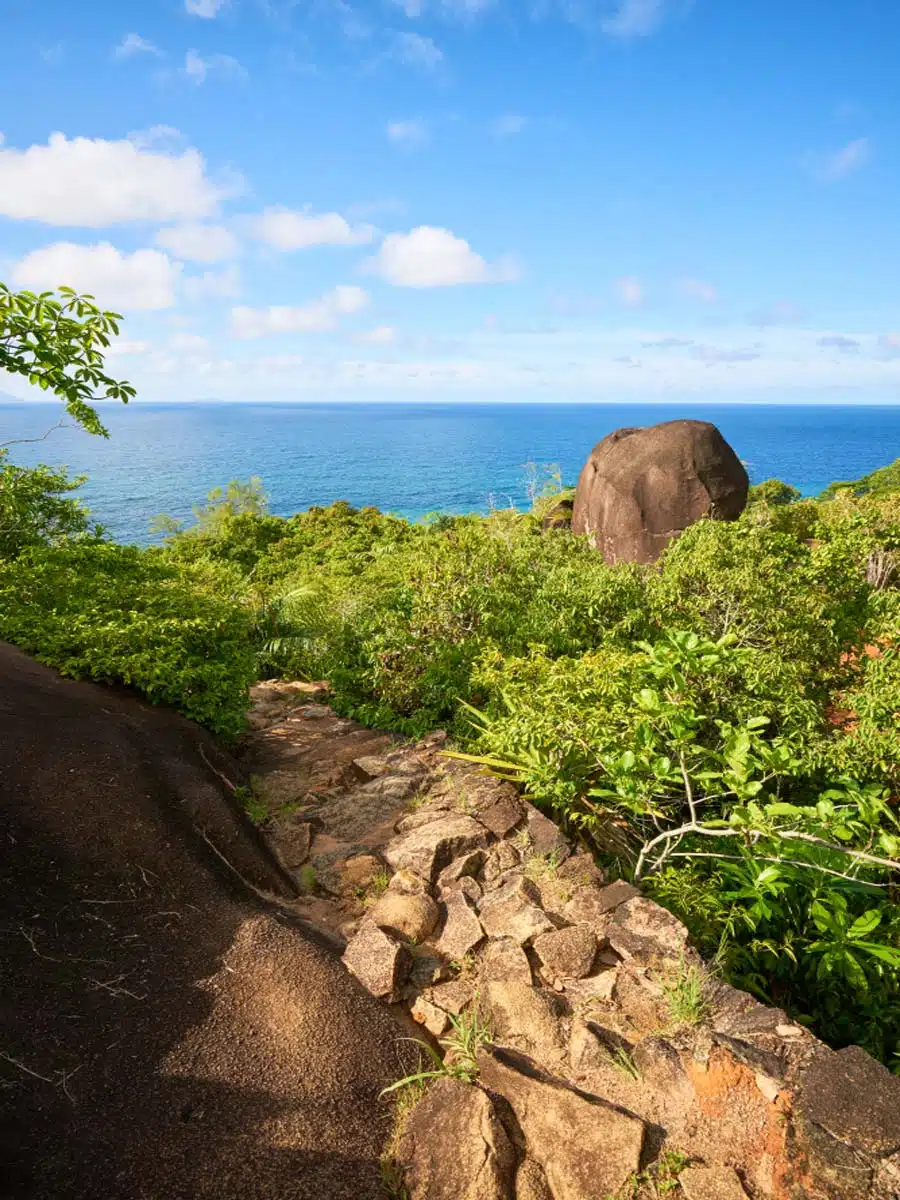
July is typically one of the breezier months. For travellers arriving from Germany or northern Europe, the temperatures are still very warm by European standards, but local conditions may feel comparatively cooler. July works particularly well for hiking, exploring, active holidays, families travelling during European school holidays, and visitors who prefer lower humidity. It may be less ideal for someone whose only priority is mirror-flat water at every beach.
Seychelles in August
August continues within the southeast trade-wind period, with similar considerations to July: steady breezes, generally lower humidity, good conditions for land-based exploration, and more variable marine conditions depending on beach orientation. Don't select accommodation purely on the assumption that every coast will offer identical swimming conditions — if beaches are your priority, research the specific location of your accommodation and the seasonal exposure of nearby beaches.
Seychelles in September
September begins moving gradually toward another seasonal transition, and wind can start to ease later in the month. It can be a very attractive period for travellers wanting to combine beaches, hiking, island hopping and outdoor activities. September shouldn't be treated simply as "the end of dry season" — conditions evolve gradually rather than changing overnight on a particular date.
Seychelles in October
October is another of the strongest all-round periods for many travellers. As the southeast trade winds weaken, the sea often becomes calmer, making October particularly attractive for diving, snorkelling, swimming, honeymoons, photography and island-hopping itineraries. Temperatures begin to rise and humidity gradually increases as Seychelles moves toward the northwest-wind period.
November to December
November is warm and often relatively calm, though humidity and rainfall generally begin increasing as the northwest winds set in — it can still be a lovely time for calmer seas and island hopping. December is a viable travel month but you should expect more humidity and a greater likelihood of tropical showers. Both suit travellers prioritising a warm-weather escape and are popular around the festive period, so book ahead.
Does it rain all day in Seychelles?
Sometimes prolonged rainfall occurs, but this shouldn't be treated as the normal pattern every time rain appears in the forecast. Tropical weather can be localised, intense and quick to change — it may rain in the mountains while another part of Mahé is considerably brighter, and Praslin and La Digue can experience conditions different from Mahé. This is why checking the current local forecast is far more useful than relying entirely on a general international weather app several weeks before travelling.
Mahé, Praslin or La Digue: does the best time differ?
The broad seasonal pattern affects all three main islands, but the practical experience can differ because of terrain, coast orientation, wind exposure, rainfall and beach geography.
Mahé
Mahé's mountains create more local weather variation, and conditions can differ significantly between higher areas and the coast. Because Mahé has many beaches facing different directions, a rental car lets you choose a more sheltered coast depending on conditions. Explore our Mahé Travel Guide.
Praslin
Seasonal beach conditions can influence which coast feels more attractive at a particular time — especially relevant when choosing accommodation, since many visitors spend more time close to their hotel or guesthouse than travellers exploring Mahé by car. Explore our Praslin Travel Guide.
La Digue
La Digue is small enough to explore different beaches relatively easily, but exposure and sea conditions still vary considerably. Some beautiful beaches can experience strong waves and currents regardless of how calm another part of the island appears. Explore our La Digue Travel Guide.
Best time for island hopping
April–May and October–November can be particularly attractive for travellers moving between several islands, because calmer conditions can make marine journeys more comfortable. But ferry conditions depend on the actual weather and sea state on the day. Don't schedule extremely tight international-flight connections around ferry journeys simply because you're travelling in a "good month" — always build sensible time into important connections. For sea-safety guidance, see Tourism Seychelles — Staying Safe at Sea.
Best time to visit Seychelles from Germany
German travellers often face a slightly different decision from visitors living closer to the equator. The question is frequently not simply "when is Seychelles driest?" but "when is Seychelles worth escaping to from Germany?"
Travelling during the German autumn — especially October or November — can provide a major contrast in temperature while coinciding with one of Seychelles' important seasonal transitions. Travelling during winter can provide even greater escape value, but December through February comes with greater humidity and rainfall risk. April and May can be excellent for travellers able to travel outside the main European summer-holiday period. July and August remain perfectly viable, particularly for families tied to school holidays, provided travellers understand the stronger southeast trade winds. The right answer depends on whether you prioritise calm sea, lower humidity, school holidays, diving, hiking or escaping the European winter.
When would we personally choose?
For a first trip combining Mahé, Praslin and La Digue, we'd look especially closely at April, May, October and November — not because these months guarantee perfect weather (they don't), but because they often provide a particularly useful balance between warm weather, manageable winds, marine activities, beaches and inter-island travel. If hiking and outdoor exploration were the priority, we'd also seriously consider the cooler, breezier southeast-wind period. If escaping the European winter mattered most, we'd accept a higher rainfall risk and still consider December through March.
The most important weather advice for Seychelles
Don't try to identify a single perfect week six months in advance. Seychelles is tropical: climate tells you what is more likely, but it can't tell you exactly what will happen at 2 pm on the third day of your holiday. Use seasonal information to choose the broad period, then use the local forecast to plan individual days. For current conditions, consult the Seychelles Meteorological Authority (and its monthly climate review) before excursions, hiking, boat trips or days where sea conditions matter. General travel information is available from Tourism Seychelles.
Best time to visit Seychelles: FAQ
What is the best month to visit Seychelles?
What is the driest time in Seychelles?
What is the rainy season in Seychelles?
Does Seychelles have bad weather in January?
Is Seychelles good in July?
Is August a good time to visit Seychelles?
Is October a good time to visit Seychelles?
Is November a good time to visit Seychelles?
Is December too rainy for Seychelles?
When is the sea calmest?
When is the best time to snorkel?
When is the best time to dive?
When is the best time for hiking?
When should honeymooners visit?
When should families visit?
Should I avoid Seychelles because of seaweed?
Plan around the trip you want
The best time to visit Seychelles depends on what you want to do once you arrive:
For calmer seas → look closely at April–May and October–November. For hiking and lower humidity → consider the southeast trade-wind months. For escaping the German winter → December–March remains possible, but accept a greater chance of rain and humidity. For diving and snorkelling → investigate the transition months. For families travelling during European school holidays → July and August remain viable, with more wind to consider.
The weather matters — but choosing the right island, coast, accommodation and itinerary often matters just as much. If you're still deciding which islands belong in your itinerary, explore our guides to Mahé, Praslin, La Digue and Seychelles private islands.